


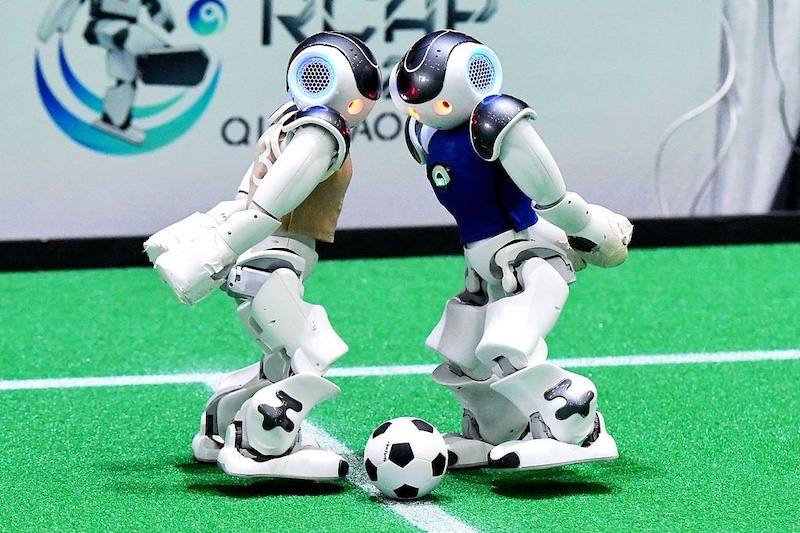
From the computer science and engineering perspective, humanoid robot games might just prove to be amongst the most fascinating developments in robotics-a kind of techno-fumento wherein human-like machines are projected for entertainment, sports, and problem-solving competitions. However, these events offer more than just fun for excited spectators. They serve as platforms for academic institutions looking into mechanical engineering, robotics, and artificial intelligence. Humanoid robot games are changing how people see machines, play, and the future of human robot teamwork. This shift ranges from serious international competitions to casual enjoyment.
What Are Humanoid Robot Games?
Humanoid robot games are competitions or events wherein robots designed to possess human shape—arms, legs, head, and sometimes facial expressions—are used for engaging in tasks or sports. Aside from physical activities such as soccer, basketball, or obstacle courses, some games also include virtual or simulated environments in which the humanoid robot functions within a digital space.
Humanoid robots are not designed for performing mundane-continuous tasks, as are industrial robots, but made to replace human motion, decision making, and adaptability. With these paradigms in mind, these games test the robots with challenging yet fun activities such as balancing, walking, running, manipulating objects, and even communicating tasks that really stretch the boundaries of robotics engineering and require a great deal of work on the part of the roboticist.
Brief History
The origins of this type of games trace back to the late 20th century when robotics competitions like RoboCup started. RoboCup had a big vision: in fifty years, they expected a humanoid robot team to outplay human World Cup champion teams in soccer. This dream forced into the field considerable attempts to improve robots’ mobility, coordination, and AI programming.
Industrial robots are designed to be used repetitively in a factory. Humanoid robots, on the other hand, replicate human motions, decisions, and adaptability. These greater capacities have been cleverly tested in a number of games for humanoid robots. It takes more than these activities, requiring balance, walking, running, manipulation of objects, and sometimes even communication, to push robotics engineering towards improvement.
Short History
The birth and history of humanoid robot games began in the late twentieth century. This was when robotic competitions like RoboCup started to appear. RoboCup had an ambitious vision. It aimed to have a team of humanoid robots compete against a human World Cup champion in football by the middle of the 21st century. Robot mobility, coordination, and AI programming advanced as a result of this audacious goal.
The first small-scale displays of humanoid robot games were found in universities and research labs. But with sensors, machine learning, and material sciences, the games created and gained international success very rapidly. Nowadays, teams of people from around the world compete in competitions of robotics at the DARPA Robotics Challenge, RoboCup Humanoid League, and others, showcasing the capabilities of humanoid robotics.
Types of Humanoid Robot Game
These games come in a wide variety, each designed to assess unique skills and technological developments. Some of the most popular ones are:
- Robot Soccer
Robot football (probably the best-known humanoid game) features two teams that compete against each other on a small football pitch with humanoid robots. The challenge is not just to kick the ball but also involves placement, team-work, and fast decision making.
- Challenge Courses
Robots must walk, climb stairs, crawl under obstacles, and balance on narrow beams in these games. These tasks test a robot’s dexterity, stability, and sensor integration.
- Missions of Rescue
These humanoid robot games are based on real disaster response and simulate dangerous scenarios. Robots must navigate debris, open doors, and operate machinery—skills that may one day save lives.
- Sparring or Martial Arts
Humanoid robots participate in controlled combat or sparring at certain events. Here, safety procedures, movement accuracy, and reaction time are the main concerns.
- Performance and Dancing
Robots act out short plays, mimic human gestures, or dance in unison in lighter, more entertaining humanoid robot games. Personality, expression, and audience participation are highlighted at these events.
Significances of Games
Despite their apparent entertainment value, humanoid robot games are essential to the development of robotics. This is why they are important:
- Technological Developments
Every game, contest, or challenge pushes the engineers to improve sensors, AI algorithms, and mechanics.
- Real World Applications
Skills developed for games can be applied to search and rescue, healthcare, and space exploration.
- STEM Education
In an entertaining way, humanoid robot games encourage students to learn about engineering, coding, and robotics.
- Human Robot Interaction:
Games improve robots’ comprehension of human commands and ability to work with humans.
Role of Artificial Intelligence in It
The majority of humanoid robot games are controlled by artificial intelligence. AI gives robots the ability to sense their environment, make snap decisions, and draw lessons from the past. AI algorithms, for instance, analyse visual data during a robot football match in order to track the ball, determine its trajectory, and determine the best course of action.
Robots can also get better over time thanks to machine learning. AI-powered robots can evaluate game performance to improve future outcomes, much like human athletes do when they watch match footage. In order to push the boundaries of humanoid robot games, this establishes a cycle of continuous improvement.
Notable Games
Among the most well-known contests and displays are:
- RobotCup Humanoid League:
The premier robot football competition that draws teams from around the world.
- DARPA Robotics Challenge:
A government-sponsored competition that tests robots in emergency situations.
- FIRA HuroCup:
This competition offers humanoid robots a range of athletic tasks, such as obstacle courses and weightlifting.
- World Robot Olympiad:
This event offers competitive categories for humanoid designs, though it is not solely focused on humanoids.
Humanoid robot games are a worldwide spectacle because these gatherings bring together the best robotics minds, from hobbyists to academic researchers.
Difficulties with Games
Humanoid robot games still face a number of obstacles despite their advancements:
- Stability and Balance:
Robots find it much more difficult to walk on two legs than people do.
- Power Supply:
The amount of time that can be spent playing games is limited by the short battery life of many robots.
- Processing Speed:
Decisions must be made more quickly in complex environments.
- Durability:
Playing video games can be physically taxing, increasing the chance of mechanical wear and tear.
Mechanical engineering, computer science, and material science must work together in an interdisciplinary manner to overcome these obstacles.
Future of Humanoid Robot Games
Humanoid robot games appear to have a very bright future. Robots should be able to make decisions more quickly, move more realistically, and even show emotion. Humanoid robot games may combine real-world robots with virtual settings to create hybrid competitions as virtual reality and augmented reality gain popularity.
Furthermore, more strategic gameplay will be made possible by advancements in AI. Consider humanoid robot basketball players who can outsmart opponents or robots that can perform intricate rescue tasks with little assistance from humans.
Like Formula 1 or esport, humanoid robot games may eventually become popular forms of entertainment. It may become commonplace to see live broadcasts, sponsorships, and enormous arenas crowded with enthusiastic spectators.
Ways to Participate in Humanoid Robot Games
There are numerous ways to participate in humanoid robot games, regardless of your background as a student, hobbyist, or professional engineer:
- Join a Robotics Club:
Numerous educational institutions have robotics teams that compete locally and globally.
- Acquire knowledge of robotics programming:
Proficiency with Python, C++, and AI frameworks is necessary.
- Build Your Own Robot:
Beginners can choose from open-source designs and kits.
- Attend Events:
One excellent way to find out about the newest trends is to watch competitions.
Conclusion
Humanoid robot games are more than just entertainment; they are a testing ground for some of the most advanced technologies available. By fusing engineering, artificial intelligence, and creativity, these games push the boundaries of what robots are capable of. From the thrill of robot football to the precision of rescue missions, humanoid robot games enthral audiences and inspire creativity.
As technology advances, it will become more difficult to distinguish between human and robotic capabilities. In the future, it might not be shocking to see humanoid robots competing in popular sports alongside or even surpassing humans. In the interim, humanoid robot games will remain a fascinating nexus of creativity, science, and competition.