
Tilt Brush surely stands among the few amazing tools whose aphorism in digital creativity is found to be put. Produced by Skillman & Hackett and purchased by Google, this Brush allows an artist to paint in a three-dimensional virtual space. With a VR headset and motion controllers, one may step into art-size environments and create immersive masterpieces using light, color, texture, and motion. Whether a dedicated designer or an inquisitive beginner, it has given all a new avenue for artistic expression.
Tilt Brush
It is an artistic phenomenon stretching far beyond its conventional meaning; it is an artist’s magical companion designed to push beyond conventional boundaries. Conjoining art, technology and spatial freedom means empowering creativity and liberty.
The forms of it has applied to construct meaning-filling space through digital media include immersive storytelling, live performance, and therapy, followed by architectural visualization. VR technologies like Tilt Brush must surely have a promising future, especially considering how VR technology is slowly becoming part of our everyday life.
So, strap on a VR headset, boot up the Brush and begin painting the world with its wondrous designs, brushstroke by brushstroke, whether you are a seasoned artist or a mere novice curious about emerging technologies.
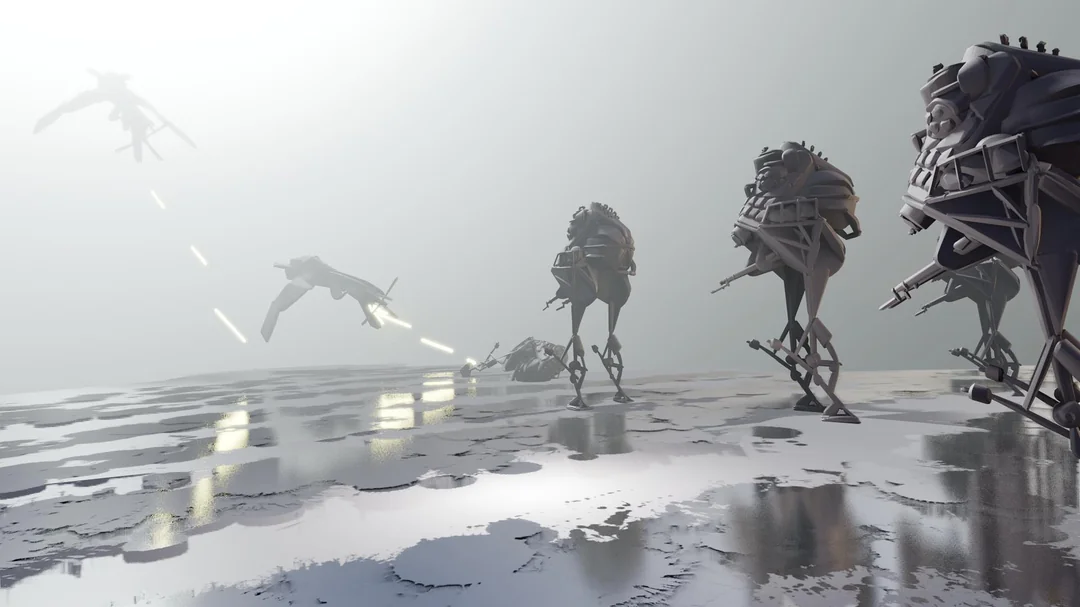
This Brush is creating a dragon in the sky and then insisting it is real or real enough, and constructing a galaxy swirling around in your room.
Here is why Tilt Brush is a Game Changer
Several factors make it stand out in the VR and art communities:
1. Immersive Creation Experience
This is set apart by its use of immersion in art creation. Tilt Brush stands apart from other digital painting applications in that you are inside the canvas rather than viewing it on a flat screen. You can walk through and around your work in it, actually exploring it from all angles.
The shift to virtual reality feels natural because of the full-body interaction, which mimics how large-scale or sculpture artists work in the real world. It provides a natural, contemporary method of creating art in which your entire body participates.
2. Groundbreaking Artistic Tools
Tilt Brush has over thirty brushes, and among these are:
- Light brushes (like Neon Pulse, Light Wire)
- Texture brushes (like Smoke, Fire)
- Shape brushes (for geometric designs)
- Particle brushes (for animation effects)
These tools allow for artwork simply not possible with traditional materials-or more commonly used digital tools.
3. Real-Time Collaboration and Sharing
With this Brush, painters can capture their painting experience, create animated replays, and post them on social media networks or through VR galleries. In newer versions and community branches like “Open Brush”, which is a continuation after Google put the project in an open-source format, collaborative aspects have been implemented, enabling several painters to co-create together in real time.
4. All Levels of Accessibility
Tilt Brush is very accessible; you don’t need special training to use it, whether you’re an experienced digital painter, 3D modeler, coder, or enthusiast. Assuming motion controls are detecting real-world hand movement, you can begin creating right away.
Applications Beyond Art
While Tilt Brush has been generally acclaimed in artistic circles, its potential stretches further across diverse fields:
1. Education
Teachers and educators are employing Tilt Brush to captivate their students in novel fashions. Picture studying astronomy standing within a 3D representation of a galaxy or studying human anatomy through a life-size model that you can edit and draw upon.
2. Architecture and Design
Architects and interior designers employ Tilt Brush to draw out ideas in three dimensions. They get to see spaces in VR pre-construction, which makes creativity and efficiency even better.
3. Entertainment and Media
Artists, directors, and game creators are incorporating Tilt Brush as a tool in their creative process. Even live shows have seen performers create with Tilt Brush in real time, with their 3D art being projected onto massive screens during their performance.
4. Therapy and Wellness
Art therapy has always helped curb stress and anxiety. This goes one step further and provides an immersive, soothing experience where one can channel emotions in novel and freeing ways.
Tilt Brush vs. Traditional Art Tools
While the Brush doesn’t replace physical painting, it supports to addition in another layer to the creative toolbox. Below mentioned are few key differences:
| Feature | Traditional Tools | Tilt Brush |
| Canvas | 2D, limited space | 3D, infinite space |
| Medium | Paint, ink, pencil | Light, particles, textures |
| Mobility | Static work area | Move around inside your art |
| Cost | Materials add up | One-time software + VR hardware |
| Cleanup | Messy | None |
For artists who want to break boundaries, and do something extra this brush offers freedom and versatility as compare to any physical medium.
The Open Source Transition
Google declared it to be an official open-source product in 2021. Within the VR art community, the announcement was well received because it gave developers complete freedom to alter and enhance the program. The following updates continue to improve the community-driven version of Open Brush:
- Multiplayer capability
- Improved brush types
- Import and export 3D model features
This shift has guaranteed the Brush ecosystem’s longevity and expansion, despite commercial development slowing down.
Shortcomings of Tilt Brush
Notwithstanding its revolutionary design, Tilt Brush has its limitations:
- It requires VR equipment, which is expensive for non-professionals.
- Three-dimensional space needs to be learned, and depth must be comprehended.
- Artwork created in Tilt Brush is primarily viewed in VR or video formats, which can limit physical exhibition opportunities.
However, with falling prices as technologies develop further and consumption of VR increases, its cost barriers should be lowered.
Tilt Brush and the Future of Art
With this Brush, we witness a paradigm shift in how we experience art. Tilt Brush expands creativity and redefines painting and sculpturing. In a world where digital experience continues to blur boundaries with everyday reality, it is a prophetic tool that shall create future artists.
Museums and galleries are beginning to showcase VR art, and some artists have even started selling their Tilt Brush creations as NFTs (Non-Fungible Tokens), introducing entirely new markets and audiences.
With VR gaining mainstream acceptance, Tilt Brush and like programs shall be integral to creative professionals and hobbyists equally.
Conclusion
Tilt Brush is more than just a painting brush, it’s a revolutionary platform that makes painters dream beyond the canvas. Different forms of art, technology and freedom of space come together into one experience which encourages everyone to stand into their imagination and create without friction.
It keeps pushing the boundaries of art through immersive storytelling, live performances, digital media therapy, and architectural visualization. The future of applications such as Tilt Brush goes on getting even stronger as virtual reality enters more and more all our worlds. This is the time for the experienced creative or the wondering newbie to emerging technologies to buckle on a head-mounted display and Pull out Tilt Brush and create your world-one stroke at a.
When virtual reality pervades all our worlds, the applications like Tilt Brush only stand to become even more enriched. Thus, if you are a professionally honed creative or simply a curious newcomer to the innovations within technologies, this is the moment to put on your VR headset, launch Tilt Brush, and start creating your world-stroke by stroke.