



Introduction to Transistors
People still talk about the transistor in electronics. Not many parts have changed things as much as that one has. A transistor is basically a little semiconductor gadget. It can boost electrical signals or flip them on and off, and it handles power too. Size wise, it is pretty small. But it supports all modern electronics pretty well. Think smartphones or even spacecraft. They came up with it in 1947. That small invention totally shook up technology back then. And it keeps developing in this digital time we have now.
Figuring out what a transistor does makes you get the tricky parts in devices we use every day. You might be a student or an engineer, or just someone curious. This article goes over its past, the different types, how it gets used, and trends for the future.
The Birth and Evolution of the Transistor
From Vacuum Tubes to Silicon Chips
The thing is, back before transistors even existed, people had to depend on vacuum tubes for handling electrical signals. Those tubes were pretty bulky. They took up way too much room.
They broke easily too.
And they guzzled power, which meant devices just could not run very efficiently.
In 1947, John Bardeen along with Walter Brattain and William Shockley put together the first real working transistor.That happened at Bell Labs. Their work got them the Nobel Prize in Physics in 1956.
It pretty much started the whole semiconductor age. By the 1960s, things moved fast with the MOSFET coming in.
That let people squeeze billions of transistors right into one single chip.
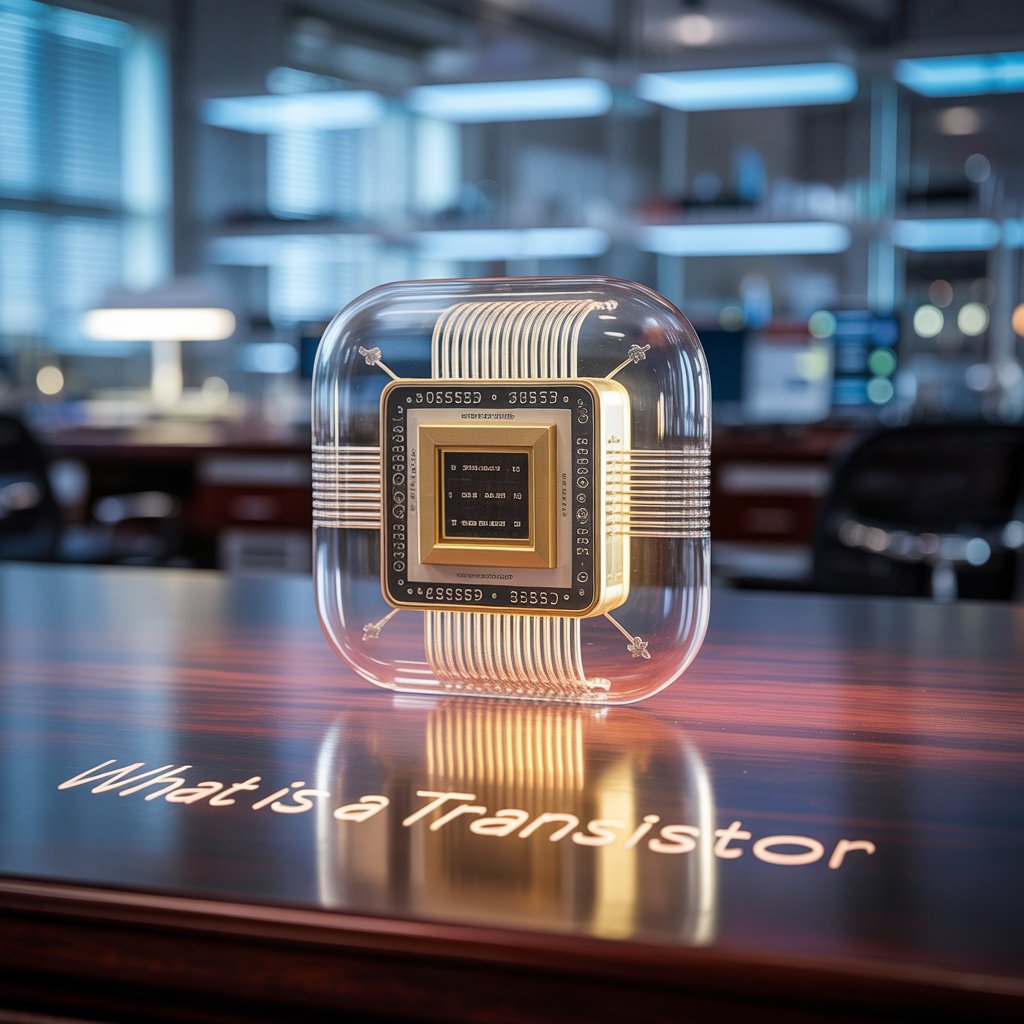
What Is a Transistor Made Of?
Semiconductor Materials and Structure
Transistors usually get made from silicon. It is a semiconductor material that handles electricity flow only under the right conditions.
Early versions relied on germanium quite a bit. Silicon took over though. It stays stable better, and there is just more of it available.
A transistor comes with three main terminals. You have the emitter, base, and collector. For FET types, it is gate, source, and drain instead.
Those terminals manage how current moves through. That lets the transistor work as a switch or an amplifier pretty much.
The way the semiconductor gets structured and doped really shapes its performance. Efficiency comes from that too.
Types of Transistors
Bipolar Junction and Field-Effect Transistors
People still talk about the main kinds of transistors out there. You have Bipolar Junction Transistors, or BJTs, and then Field-Effect Transistors, which are FET’s.
BJTs work with both electrons and holes as charge carriers. They are pretty good for amplifying signals, you know.
FET’s include things like Moses. Those use voltage to manage the current flow. They show up a lot in digital setups these days.
Moses really took over in modern electronics. That is because they scale well and do not use much power at all.
Every type comes with its own subtypes too. Like NPN and PNP for BJTs, or NMOS and PMOS for the others. All of them fit certain jobs just right.
How Does a Transistor Work?
Amplification and Switching Functions
Transistors basically handle the flow of electric current between their different terminals. You know, they control it pretty precisely. Take amplification for example. A small current goes into the base. That lets it manage a much bigger current on the output side. Switching works differently. The transistor just flips on or off. Those states stand for binary 1s and 0s in computing. All that binary action really builds the groundwork for digital systems. Logic gates depend on it too. What stands out is how transistors amp signals or switch them around. They fit right into analog work and digital ones both. That versatility keeps them going strong.
Applications of Transistors
From Smartphones to Spacecraft
Transistors show up in just about every electronic gadget out there.
They handle the heavy lifting for smartphones and televisions, radios too, along with computers. All that lets data get processed and people communicate without a hitch. Over in industrial spots, these things control power flow for all sorts of machinery. Think medical devices and even renewable energy setups like solar panels.
Modern processors cram billions of transistors onto microchips. Apple’s M1 chip packs over 16 billion, for instance.
Reliability counts a lot with them. Efficiency too. That is why they fit right into high performance gear and those mission-critical applications where failure is not an option.
Transistors in the Age of AI and Quantum Computing
Meeting the Demands of Emerging Technologies
AI and machine learning really need a lot of computing power.
The thing is, to keep up with that, chipmakers keep pushing out these advanced transistors. Smaller sizes, faster speeds all around.
By 2025, sales of semiconductors everywhere should top 600 billion dollars. AI stuff and data centers, they are the main drivers there.
Quantum computing gets into transistor-like parts too. You know, for handling queries and fixing errors along the way.
Innovations such as 3D transistors, carbon nanotubes, well, they stretch out Moore’s Law pretty far.
The Future of Transistor Technology
Scaling Limits and New Frontiers
People still talk about Moore’s Law a lot. It said transistor counts would double every two years. But these days, physical limits are closing in pretty fast.
Transistors get sized in nanometers now. You know, 3nm chips are just starting commercial production.Engineers keep poking around with new materials. Things like graphene and gallium nitride seem promising for better performance. Then there is 3D stacking. And chaplet architectures too. They give options beyond the usual scaling tricks.The thing is, transistor futures come down to juggling performance, power efficiency, and keeping costs down.
Why Understanding Transistors Matters
The Backbone of the Digital World
The thing is, figuring out what a transistor really is can help you get the whole complicated side of tech we use every day. Transistors make our gadgets go fast. They keep them small too. And they save on energy in a big way. Pretty much everything from the global economy to keeping the environment in check gets touched by them. Tech keeps changing all the time. Still, transistors stay right at the heart of inventions and pushing things ahead. Their whole background shows off some really smart science work. And it has a ton of everyday effects too.
Conclusion
People still wonder about transistors sometimes. They are these small devices that pack a punch. They amplify signals and switch them on or off. That makes them the base for all kinds of electronics we use now. Back in 1947, when they invented it, nobody really knew. But look at today. They drive AI stuff and change everything. We are live different, work different, and even talk different because of them. And it does not stop there. The way they keep improving points to bigger things ahead. Like better computers, smarter energy use, and connections that are way tighter. The thing is, getting what a transistor does goes beyond just wires and chips. It is about seeing the smart ideas that run our whole digital life.
Frequently asked questions come up a lot.
What is a transistor short?
A transistor is this kind of semiconductor device. It amplifies electronic signals or switches them around. Those transistors pretty much form the core of everything in modern electronics.
What is a transistor in simple words?
A transistor works as this semiconductor thing that amps up or flips electrical signals and power around. The thing is, it counts as one of the main pieces that make up today’s electronics. Pretty much, you build it from semiconductor stuff, and it usually has three or more spots to hook into a circuit.
How many transistors are in a CPU?
CPU transistor counts can differ a ton. Older processors might only pack in millions of them. Modern ones push into the billions though. Some high-end chips even top 50 billion. Take the Intel Core i7-980X from 2010 for instance. That one had about 1.17 billion transistors. Then look at the Apple M1 chip that came out in 2020. It squeezed in 16 billion. The thing is, transistor numbers do not tell the whole performance story. Architecture matters a lot. Caches play a role too. Other factors come into it as well.
What is the size of a transistor?
Companies like Intel make them just 14 nanometers across these days. The thing is, that makes them only 14 times wider than DNA molecules. They build them from silicon. Silicon happens to be the second most abundant material on the planet. Its atoms sit at about 0.2 nanometers wide.